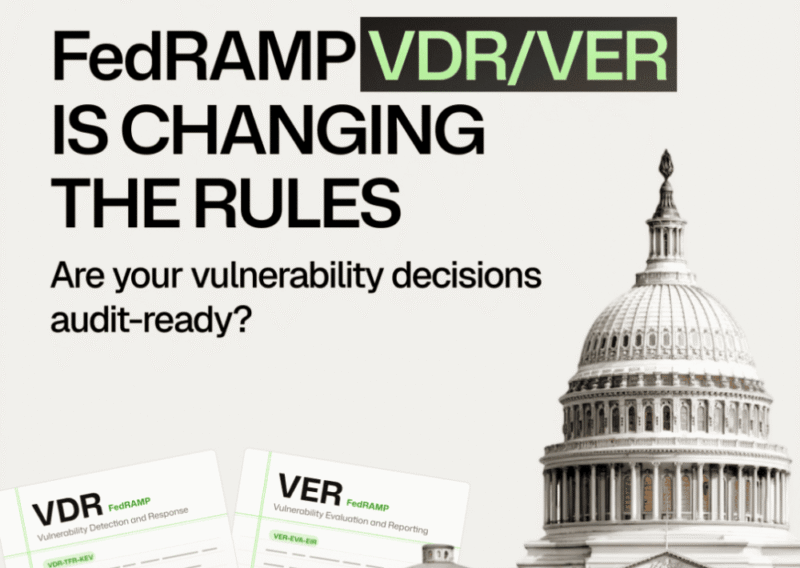
FedRAMP VDR/VER: From Vulnerability Scanning to Defensible Decisions
Fortreum VDR/VER, powered by Kovr, combines cybersecurity expertise, practical implementation, and AI-native automation to help cloud service providers operationalize new FedRAMP vulnerability requirements.
For FedRAMP cloud service providers (CSPs), vulnerability management is no longer just about identifying security weaknesses.
It’s about understanding which vulnerabilities matter, determining how quickly they need to be addressed, and maintaining the evidence to support every decision.
FedRAMP’s Vulnerability Detection and Response (VDR) and Vulnerability Evaluation and Reporting (VER) rules introduce new expectations for continuous detection, contextual evaluation, remediation, and reporting.
With a December 7, 2026, milestone approaching, CSPs need more than another tool or another compliance checklist.
They need a working vulnerability management program.
What changes under FedRAMP VDR and VER?
Traditional vulnerability management has often relied on periodic scanning, CVSS severity scores, and predefined remediation windows.
VDR and VER shift the focus toward persistent detection and risk-based decisions informed by the context of each cloud environment.
Providers must evaluate vulnerabilities using factors including:
- Likely Exploitable Vulnerability (LEV): Whether a vulnerability could realistically be exploited within the cloud service offering.
- Internet-Reachable Vulnerability (IRV): Whether a vulnerability could be triggered by a payload originating from the public internet.
- Potential Agency Impact N-rating (PAIN): The potential impact of exploitation on federal agencies using the service.
These evaluations help determine how vulnerabilities should be prioritized and addressed.
For example, under the Rev5 VDR rules, the maximum expected mitigation or remediation timeframe for a likely exploitable, internet-reachable PAIN-5 vulnerability is two days for a Class C offering and just 12 hours for Class D.
The clock starts when the vulnerability is evaluated.
That creates an immediate operational question: Can your teams evaluate findings, assign responsibility, act within the expected timeframe, and explain the decisions afterward?
The challenge: Turning requirements into an operating process
Most CSPs already have vulnerability scanners, asset inventories, security teams, and compliance processes.
The difficulty lies in connecting them.
Security engineers need to understand exploitability, asset exposure, and remediation priorities.
Compliance leaders need to document determinations, maintain evidence, and prepare reports for agency oversight.
Leadership needs confidence that responsibilities are clear and the process can operate consistently.
When these activities happen across disconnected tools and teams, organizations risk duplicating work and losing visibility into the decisions behind each finding.
The challenge isn’t simply detecting more vulnerabilities.
It’s turning vulnerability data into decisions that can be acted on and defended.
The Fortreum approach: People, process, and technology
A team that knows the requirements. A platform that puts them to work.
Fortreum VDR/VER, powered by Kovr, brings together three essential components of a functioning vulnerability management program.
1. People: Spend less time interpreting requirements
Fortreum’s Cyber Defense and Readiness specialists bring experience in FedRAMP Rev5 continuous monitoring and vulnerability management.
They help CSPs understand how VDR and VER apply to their environments, identify implementation gaps, and determine what evidence is needed to support vulnerability decisions.
Rather than leaving security and compliance teams to interpret every requirement independently, Fortreum helps translate the rules into practical actions.
2. Process: Know what to implement and who owns it
Successful implementation requires more than understanding the regulations.
Organizations need clear evaluation criteria, defined response responsibilities, reporting workflows, and coordination between security engineering and compliance teams.
Fortreum works with CSPs to establish a practical implementation plan and a repeatable process for evaluating findings, managing response activities, and documenting decisions.
The CSP retains responsibility for its vulnerability determinations and compliance obligations.
3. Technology: Reduce the manual work behind each finding
Kovr, Fortreum’s patented AI-native compliance automation platform, helps connect vulnerability data with the operational processes required to act on it.
The platform ingests scan and inventory information, matches findings to assets, and produces first-pass evaluations of likely exploitability, internet reachability, and potential agency impact.
Remediation deadlines, supporting evidence, and vulnerability tracking can be managed through connected workflows.
The customer’s team reviews determinations and directs the response, combining automation with human oversight.
One coordinated approach to vulnerability management
CSPs may need to support traditional Rev5 Plans of Action and Milestones (POA&Ms) alongside newer VDR and VER reporting expectations.
Maintaining separate workflows can increase administrative effort and make it harder to maintain consistent records.
Fortreum’s approach uses a shared vulnerability dataset to support evaluation, remediation tracking, and reporting.
The objective is straightforward: help CSPs operate one coordinated vulnerability management program rather than maintain disconnected processes for the same findings.
Getting started with Fortreum VDR/VER
The engagement begins with understanding the CSP’s environment, certification class, asset inventory, scanning coverage, and existing vulnerability management process.
Fortreum then works with the customer’s team to identify gaps, establish responsibilities, connect supported data sources, and implement the evaluation and reporting workflow.
The result is a practical path toward initial operating capability and a repeatable process for ongoing vulnerability management.
Prepare for the next phase of FedRAMP
The new VDR and VER rules make defensible vulnerability decisions increasingly important.
For CSPs, readiness requires more than technology. It requires people who understand the requirements, a process that assigns responsibility, and tools that reduce the manual effort involved.
Fortreum brings the expertise. Kovr helps put it into operation.
With the December 7 milestone approaching, now is the time to evaluate your current approach.
Book a 30-minute session with Fortreum’s lead assessors to review your environment, identify potential gaps, and discuss your VDR/VER implementation needs: